




Newsletter Subscribe
Join thousands of readers who get our Sunday Briefing: one email, five essential stories, zero fluff. Subscribe NOW!

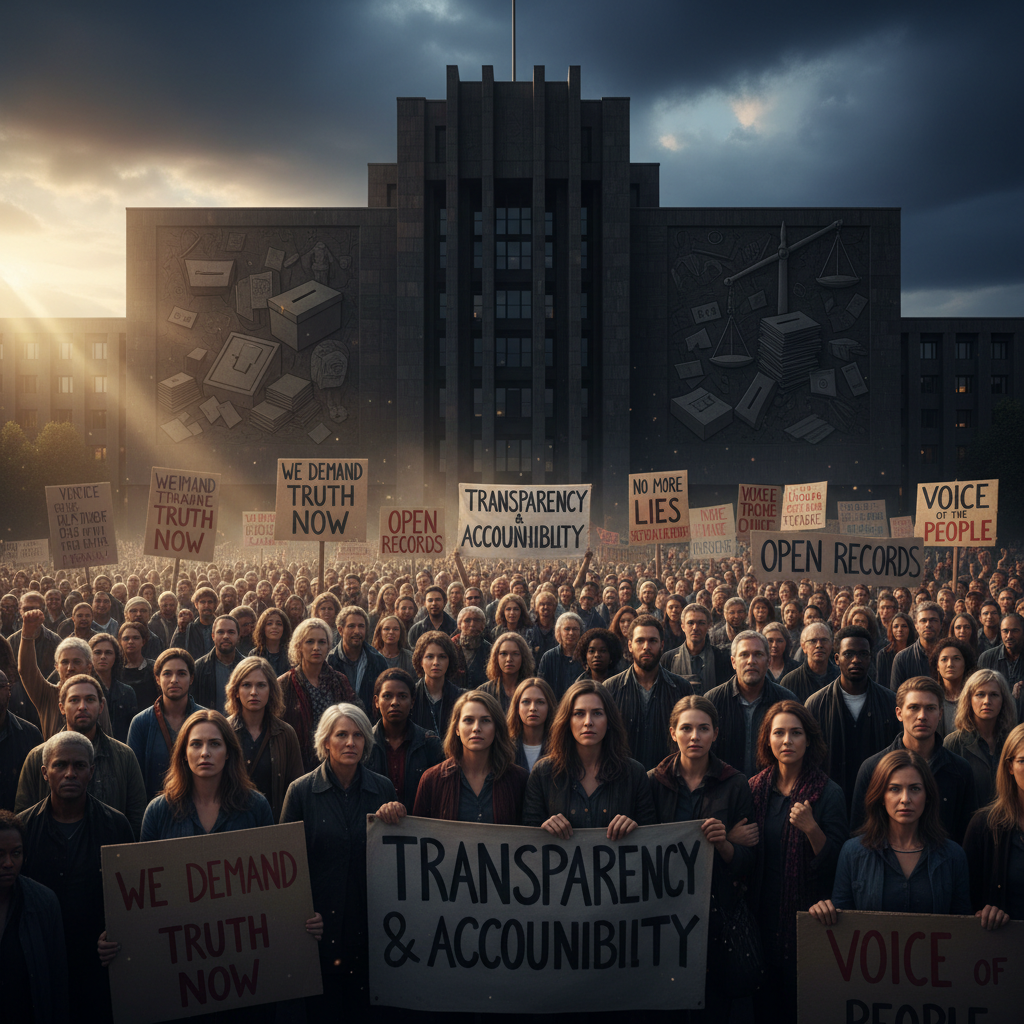
Political Analysis: Unmasking the Illusions of Democracy dives into the misperceptions surrounding democracy and the political landscape, exploring the role of media bias, political institutions, and polarization. It encourages readers to critically engage with political narratives, advocate for transparency, and become informed citizens in an era rife with misinformation.
We’re living in a world where “democracy” has become a buzzword, yet many struggle to grasp what it truly means. The statistics are staggering: political polarization in the United States has reached unprecedented levels, with more people than ever divided not just by opinion but by fundamental beliefs. When I see friends squabbling over political memes instead of engaging in thoughtful discussions, I can’t help but feel a sense of urgency. We’re losing the very essence of democracy, and it’s time we take a critical stance on the narratives we accept without question!
To me, political analysis isn’t just an academic exercise; it’s a vital means of making sense of the complex world around us. The media feeds us information, but how much of it is skewed by bias? The truth is, we need to tackle these questions head-on, reinforcing our commitment to transparent and honest dialogue.
Talking Points:
Let’s face it: the quest for political objectivity is often a fool’s errand. This belief is peppered with the idea that we can separate facts from feelings, when in reality, our biases shape everything. I remember once reading two different articles on the same political event; one made the subject look like a hero while the other painted them as a villain. The discrepancies highlighted the disturbing notion that what we consider “objective news” is often anything but.
Media bias isn’t just a television segment; it’s a systemic issue embedded in our political discourse. Many outlets cater to specific audiences, amplifying their perspectives while burying dissenting views. So, if you think you’re getting an unbiased perspective, take a second look! What assumptions are being made? Whose voice is being drowned out?
Talking Points:
Political analysis has undergone a drastic transformation over the decades. Gone are the days when an ideologue’s opinions were the primary focus. Instead, the field has shifted to prioritize political methodology and quantitative research, almost elevating numbers above narratives.
Why? Because politicians have become all too aware of the power of data. Poll results dictate campaigns. However, relying solely on metrics can create a skewed picture of reality. While quantification provides clarity, it can overshadow crucial narratives that data alone can’t encapsulate. A simplistic interpretation of survey results ignores the complexity of political ideologies that shape public opinion.
Talking Points:
Let’s peel back the layers of bias that rest heavily upon research today. Recognize this: every study, every opinion piece has a hidden agenda. Funding often comes from organizations with specific political leanings. If a corporation backs a research project, you can bet they’ll want their interests reflected in the outcomes. This turmoil creates an intricate web where political bias is not merely a side note; it’s often the crux of the analysis.
When we consult studies, we need to scrutinize who commissioned the research and what motivations lie underneath. It’s a practice many neglect at their peril.
Talking Points:
Political polarization isn’t just the stuff of headlines; it’s real and palpable. Affective polarization, the animosity we feel toward opposing parties, has skyrocketed. People no longer see each other as political adversaries—they view them as threats.
Navigating this sea of hostility isn’t simple, particularly when echo chambers thrive online. When was the last time you followed someone on social media with opposing views? It’s likely hard to recall because confirmation bias is begging for comfort. Breaking free from this cycle requires conscious effort. Challenge yourself—seek out differing opinions, engage instead of retreating. It’s not easy, but nothing worthwhile ever is!
Talking Points:
Quantitative research has proven its worth, particularly in political science, yet it’s not a catch-all solution. The structure it provides can be both illuminating and limiting. Sure, numbers can show trends, but they often fail to capture the rich tapestry of human emotion.
By prioritizing numerical data, we risk losing valuable qualitative insights that render human behavior in its full complexity. Remember that cherry-picked statistics can tell a story, just not the whole story. Balancing quantitative results with qualitative analysis is the answer. Researchers should strive to marry the two, providing a fuller understanding of public perspectives and policy decisions.
Talking Points:
Political institutions wield immense power over policy and governance. They function as gatekeepers, influencing which issues emerge and which fade into obscurity. But how do these structures react to external pressures? It’s a continuous give-and-take.
Take, for instance, a state legislature’s decision-making process on budgetary allocations. Multiple factors influence choices: public pressure, media narratives, and political affiliations. A study I stumbled across points out that party affiliation significantly shapes budget priorities. Political parties become puppets on strings, leaving them vulnerable to the biases rooted in their institutions.
Talking Points:
Political parties hold monumental weight in our political systems. They are not just vessels for candidates; they are influential players in the greater narrative. Their decisions create ripples that affect policy trajectories. Party affiliation is often the lens through which public opinion is interpreted and acted upon.
Yet, how effectively do parties engage with the electorate? Are they representatives, or do they merely echo the voices of their inner circles? When votes are split and interests compete, the party dynamics can stall governance, leading to gridlock instead of progress.
Talking Points:
The media’s role in shaping political discourse cannot be overstated. The headlines we read, the soundbites we hear—they construct our understanding of the political landscape. Last year, for instance, a major event was obscured by sensational headlines, diverting attention away from purpose-driven discussions.
To be an informed citizen, we must consume media critically. Challenge outlets, question reporting biases, and look beyond the first narrative you encounter. Dissect the hype surrounding certain news items—there’s always more than meets the eye.
Talking Points:
Let’s put the theories to the test. Consider recent political events—can we analyze them through the lens of all these concepts? Look at how political polarization has shaped voting patterns in crucial elections. When we dissect these cases, it’s clear: political analysis has direct implications on democratic participation.
Another example lies within public policy debates. Examining how misleading data fueled certain narratives can illustrate the pitfalls of unchecked political bias. Every time we engage with these concepts, they challenge us to improve our discourse.
What I’ve come to realize is that political analysis isn’t merely academic—it’s a vital tool for enhancing democracy itself. We need to embrace the complexity of our political landscape, prioritizing thoughtful dialogue over partisan squabbling. Let’s acknowledge the intrinsic biases in our institutions and media, allowing them to challenge our perceptions rather than confirm them.
Next time you find yourself entangled in political discussions or examining news stories, remember your role in scrutinizing the narratives. Engage with them, question them, and, most importantly, contribute to creating a more informed public. Your voice matters! Share your thoughts, experiences, or strategies in the comments below—together, we can reshape our understanding of democracy and politics.
Q1: What are the key factors influencing political polarization?
A1: Political polarization is influenced by various factors including partisan media coverage, social identity alignment, and the emergence of echo chambers in online platforms.
Q2: How can individuals work against their own biases in political discussions?
A2: Individuals can counteract biases by actively seeking diverse viewpoints, engaging in constructive dialogues, and being willing to challenge their own preconceptions.
Q3: In what ways does media bias manifest in political reporting?
A3: Media bias often appears through selective coverage, language choices that frame narratives, and the prioritization of certain stories over others.
Q4: Why is quantitative research not sufficient alone in political analysis?
A4: Quantitative research can highlight trends but often lacks the context and depth provided by qualitative insights, which together give a fuller picture of political phenomena.
Q5: How do political institutions influence public policy decisions?
A5: Political institutions shape public policy by determining the processes, priorities, and players involved in decision-making and governance, often reflecting the interests of those in power.