






Newsletter Subscribe
Join thousands of readers who get our Sunday Briefing: one email, five essential stories, zero fluff. Subscribe NOW!

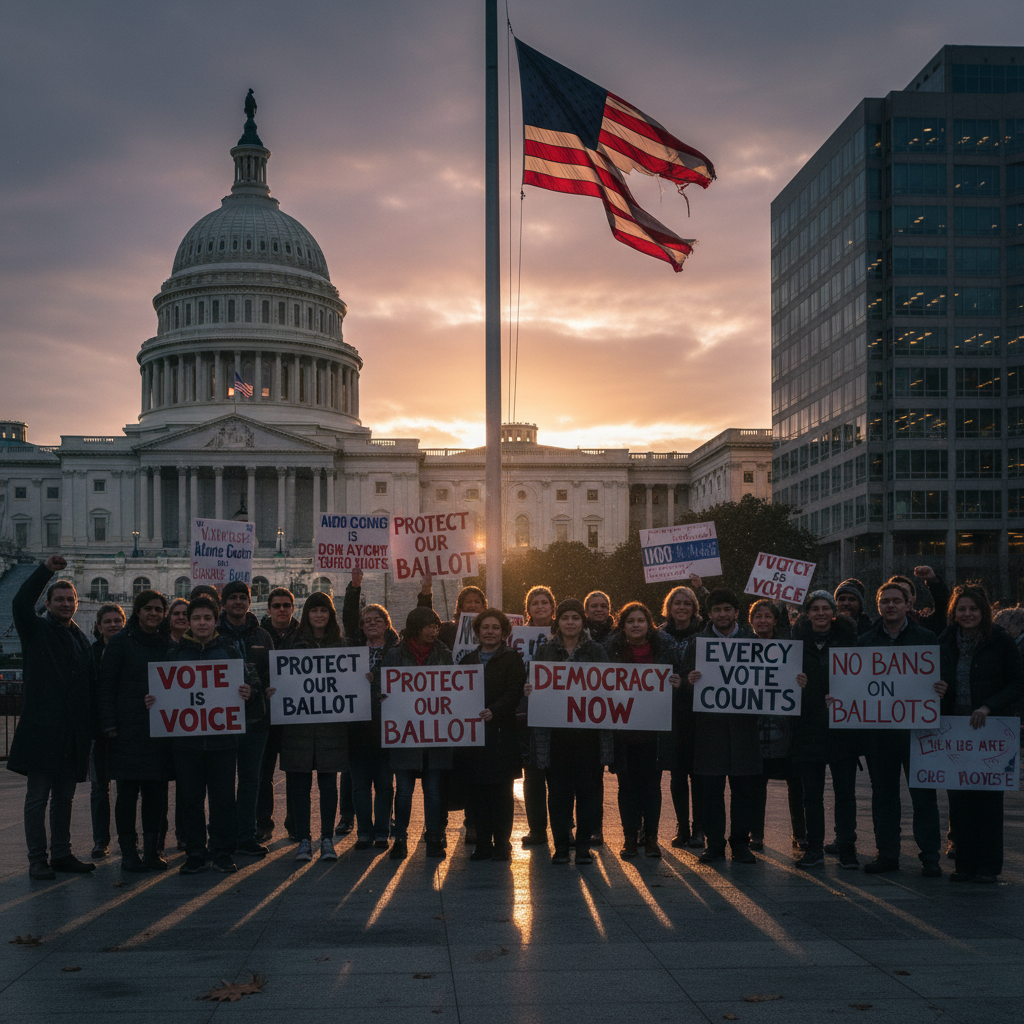
In his ruling for *Louisiana v. Callais*, Justice Samuel Alito questioned the legitimacy of creating majority-minority districts, casting doubt on a key pillar of voting rights. This critical look at our voting rights landscape reveals much about the regression we're experiencing at this crucial time.
In April 2026, a ruling emerged from the U.S. Supreme Court that sent shockwaves through the civil rights community. The decision in Louisiana v. Callais didn’t merely brush aside a congressional map; it potentially dismantled years of hard-fought gains in the struggle for equitable representation. How quickly it seems the delicate fabric of voting rights can unravel! In today’s America, what does this mean for minority representation?
Talking Points:
The Voting Rights Act, passed in 1965, is a cornerstone in the fight against racial discrimination in voting. For many, it embodies hope and justice after a century of systematic disenfranchisement, particularly in Southern states. Section 2 specifically prohibits voting practices that discriminate based on race, designed to ensure minority voices are heard. I often think about the brave souls who marched in Selma; their sacrifice paved the way for legislation that now appears to be eroding.
Yet, as we’ve seen in recent years, the progress symbolized by this act seems increasingly fragile. The Supreme Court has consistently chipped away at its protections, raising questions about the true intent behind these judicial decisions. How goes the struggle for civil rights when judicial overreach feels so brazen?
Talking Points:
The case Louisiana v. Callais serves as a critical case study in understanding the contemporary landscape of voting rights. The Supreme Court’s decision, delivered on April 29, 2026, ruled 6-3 that Louisiana’s congressional redistricting plan—which aimed to create a second majority-Black district—constituted an unconstitutional racial gerrymander. Justice Samuel Alito’s majority opinion argued that such redistricting was motivated by race rather than by neutral criteria.
Contrast this with Justice Elena Kagan’s dissent. Her impassioned defense of civil rights was rooted in a recognition of the progress that hangs in the balance. In her view, stripping away protections risks a regression akin to the dark days before the Voting Rights Act. Reading those rising dissenting voices, I felt a flicker of hope.
Talking Points:
The implications of this ruling extend far beyond Louisiana, reaching deep into the heart of minority representation. By sidelining the creation of majority-Black districts, the court’s decision may discourage minority voter turnout and political engagement. It smacks of a deliberate attempt to dilute Black political power. Without a robust framework to challenge these tactics, we risk falling back into ineffective representation—an echo of history many spent their lives fighting against.
Racial gerrymandering continues to be a thorny issue. Regions like Louisiana, with fluctuating demographics, must navigate redistricting that reflects the electorate without diminishing the precious gains of the past. The road to meaningful representation grows rockier.
Talking Points:
Zooming out to observe the political ramifications of the Court’s ruling is essential. Louisiana is a microcosm of larger trends within Southern states. The Supreme Court’s decision could tip the balance of power within not just Louisiana but Congress as a whole during crucial upcoming elections.
As these redistricting maps are redrawn, we must ask: who stands to lose? Anyone who believes in equitable representation is likely to feel uneasy. The vulnerable areas in Congress might not see the resurgence of their representatives.
Talking Points:
A close legal analysis of Alito’s majority opinion reveals a concerning shift in how justices interpret the constitutional intent behind voting rights. The justification for the ruling centers around the assertion that drawing districts based solely on race undermines the principle of equal protection under the law. However, what about the historical context? It is evident that these arguments do not engage with the material realities of racial discrimination which the Voting Rights Act sought to correct.
This perspective deserves vocal dissent; history must inform our legal discourse, lest we wander into the echo chambers of sanitized history.
Talking Points:
Justice Kagan’s dissent isn’t merely a retort; it’s a clarion call for democracy. It raises fundamental questions: how much deference should we afford a court that seems increasingly predisposed to protect the status quo? As citizens, we have a right to vigilantly question what constitutes judicial overreach in defending against civil rights erosion.
The mechanics of a balanced democracy necessitate checks on all branches of government, particularly when decisions can exacerbate existing inequalities. We need justices who believe in civil rights protections and work—to use Justice Kagan’s spirit—to uphold them unapologetically.
Talking Points:
The public response to the ruling has been nothing short of fierce. Outrage sparked protests, petitions, and frank conversations around the fate of voting rights across the nation. Organizations like the NAACP and the ACLU are reaffirming their commitments to fight against voter suppression tactics, knowing full well the stakes involved. It’s encouraging to see grassroots activism igniting across the political spectrum, as many grasp the urgency to reclaim lost ground.
Political figures, both local and national, need to step up. Silence is complicity, and not all responses have been encouraging. Only when push meets will is change enacted. The time for action multiplies; a persistent effort toward legislative initiatives could help reinforce protections that this ruling jeopardizes.
Talking Points:
Looking forward, the ink hasn’t dried on the Louisiana v. Callais decision before voices began to call for immediate legislative responses. We must consider what new or existing laws are on the table to counteract these legal setbacks. Strengthening voting rights legislation at both state and federal levels is imperative.
Bipartisan support is crucial, though; echo chambers complicate collaborative progress. We risk losing ground if we allow partisanship to dictate when and how we protect the vote. Close to home, states like Louisiana must also be held accountable for their redistricting practices that further diminish equitable voting access.
It’s astonishing how quickly we’ve witnessed the erosion of voting protections that seemed so solid just a few years ago. As citizens, we must not only reckon with this reality but actively work against it, reflecting on our roles in fostering equitable representation. The stakes couldn’t be higher—the very essence of democracy hinges on the belief that every voice has the right to be heard.
So, I urge you, share your thoughts! What experiences have you had with voting rights in your community? Let’s keep this dialogue going. We each have a part to play in shaping the future of our electoral landscape.
Q1: What was the main outcome of the Louisiana v. Callais Supreme Court decision?
A1: The Supreme Court ruled that Louisiana’s congressional redistricting plan, which created a second majority-Black district, was unconstitutional, thereby impacting minority representation.
Q2: How does Section 2 of the Voting Rights Act relate to this decision?
A2: Section 2 prohibits voting practices that discriminate based on race, and critics argue that the ruling undermines these protections, risking regression in civil rights gains.
Q3: What are some potential political ramifications following this ruling?
A3: The ruling could shift congressional power dynamics and impact upcoming elections, possibly leading to decreased minority representation and engagement in the political process.
Q4: How can citizens respond to uphold voting rights in light of this decision?
A4: Citizens can mobilize through grassroots activism, support voting rights organizations, and advocate for new legislation that reinforces protections against discrimination in voting.
Q5: What are the dissenting opinions concerning the decision?
A5: Justice Kagan, in her dissent, expressed concern that the ruling threatens decades of civil rights progress and undermines democracy, advocating for the need to honor protective measures for minority voting rights.