







Newsletter Subscribe
Join thousands of readers who get our Sunday Briefing: one email, five essential stories, zero fluff. Subscribe NOW!
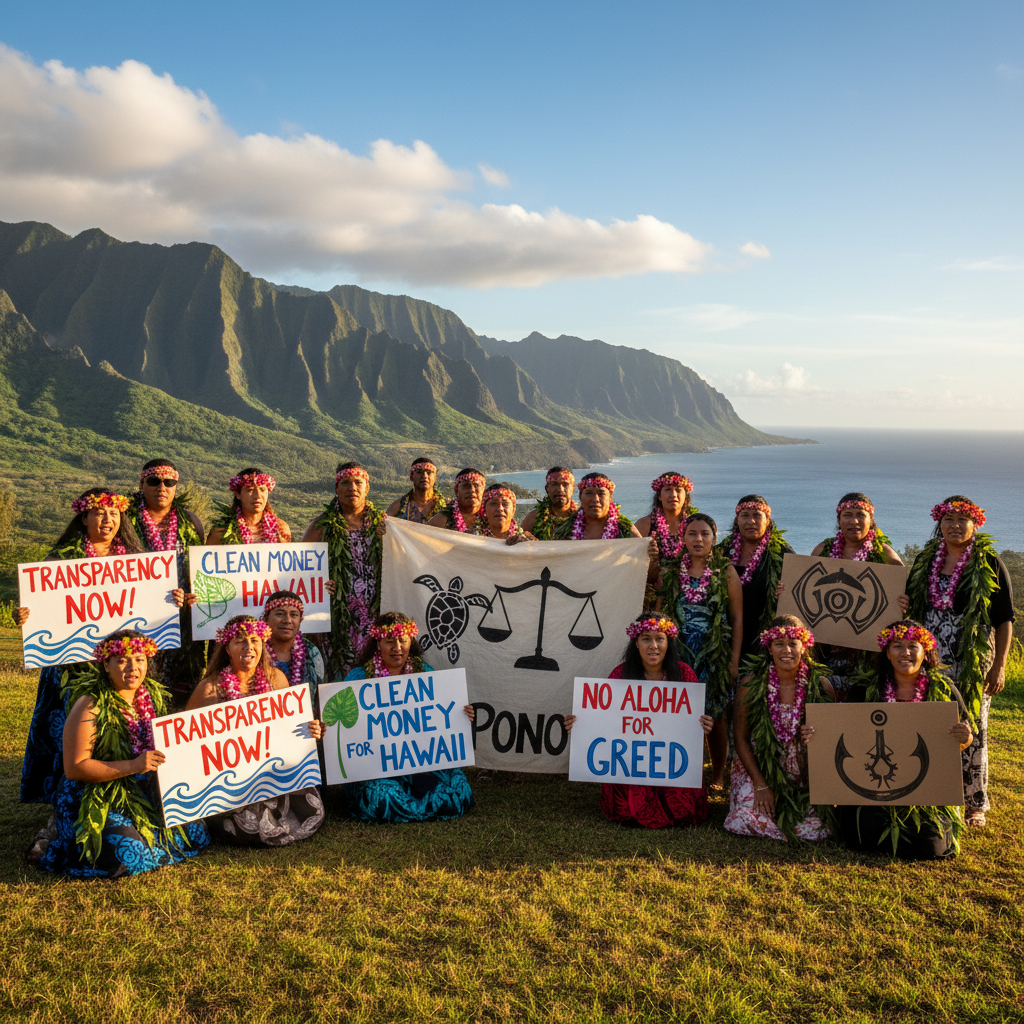
Hawaii's Act 011 represents a bold step against corporate political spending, aiming to curb the influence of dark money in elections. This legislation raises critical questions about democracy and corporate power, challenging conventional narratives on political funding.
In 2024, over $4 billion was spent on political campaigns by special interests, with almost half of it funded through undisclosed sources. That number shocked me. I mean, we’re talking about a tsunami of cash flowing into our electoral processes, with some of it making its way from dark money groups that don’t have to disclose their donors. It’s unsettling, especially when you consider what this means for democracy and the average citizen’s voice. It makes you think—how much of our political narrative is genuinely ours, and how much is crafted by faceless corporations?
In the midst of this chaos, Hawaii has taken an audacious step. On May 15, 2026, the governor signed Act 011, a bold piece of legislation aimed at curtailing the influence of corporate spending in elections. This is not merely a legal maneuver; it’s a declaration of independence from corporate interests that many argue have tainted our democracy. But is it a brave strike for sovereignty or a legal misstep that might crumble in court? Let’s unpack this.
Talking Points:
When the Citizens United v. FEC decision came down in 2010, it was a defining moment that ignited outrage and debate across the political spectrum. That ruling opened the floodgates for corporations to spend limitless amounts of money on elections, thus granting them a voice that arguably overshadowed individual voters. Imagine waking up to find that corporations had, for all intents and purposes, received a giant megaphone to amplify their interests while drowning out the everyday citizen.
Since then, political action committees have flourished, and we’ve witnessed more than $4 billion in outside spending during 2024’s elections alone! It’s like watching a slow-motion train wreck—you know it’s happening, but often feel powerless to stop it. It’s clear that Hawaii’s decision to tackle this head-on is born out of frustration with corporate influence and an urgent desire for political transparency.
Talking Points:
So, what’s actually in this Act 011? Well, one of the standout features is its redefinition of corporations in Hawaii. According to the law, companies will no longer have the rights to engage in political spending or contribute to campaigns and ballot measures. This is significant because it repositions the balance of power. For far too long, the corporate entity has been treated somewhat like an individual person due to corporate personhood principles, which has compounded the problem of influence and spending.
Hawaii’s Act is a pushback against that notion. It’s a clean break of sorts, aimed to limit the kind of dark money flooding political spaces. And guess what? The law is set to take effect on July 1, 2027. Circle that date—it could mark a new chapter in how elections are conducted in the Aloha State.
Talking Points:
The implications of Act 011 are significant. First, we can anticipate a potential reduction in spending from dark money sources. If corporations can’t spend freely, it removes a primary source of funding for many campaigns, forcing candidates to seek alternative funding mechanisms. What might this look like? Candidates may have to connect more directly with constituents, focusing on grassroots efforts to raise funds and support.
However, a word of caution is necessary. Some experts fear that this could lead to unintended consequences. For instance, without corporate backing, traditional campaign financing might shift to individual donors, which isn’t necessarily a panacea. The whole system could become reliant on fewer donors’ whims, leading to the same ideologies underpinning decision-making processes.
Talking Points:
Despite Hawaii’s bold stance, not everyone is on board. In fact, Hawaii’s Attorney General Anne Lopez has voiced concerns regarding the constitutionality of Act 011. Her worry hinges on potential legal challenges that may arise around First Amendment rights—the infamous right to free speech, which corporations argue includes spending money on campaigns. If this law is challenged, it could land a hefty blow to Hawaii’s ambitions to rein in corporate influence.
Constitutional debates surrounding the law will inevitably lead to courtroom clashes. Are we prepared for those battles? This could extend beyond Hawaii’s borders and spark similar discussions in other states—could it ignite a nationwide movement against corporate spending?
Talking Points:
Let’s take a step back and see how Hawaii’s efforts stack up against other states. For instance, California and New York have enacted similar measures, but their effectiveness varies. While many states flirt with restricting corporate spending, few have gone as far as Hawaii in terms of outright prohibition.
This unprecedented leap raises questions about the state’s sovereignty and the role of corporate influence in shaping governance. Will Hawaii become a beacon for reform, or will its efforts be drowned out by legal challenges? The answers lie in the balance of courage versus convention.
Talking Points:
Perhaps one of the most fascinating aspects of this conversation is public sentiment. Many voters are fed up with the overwhelming influence of money—especially when they believe it comes at the expense of their interests. In opinion polls, support for campaign finance reform often hovers around 70%, meaning a solid majority of citizens empathize with the motives behind Act 011.
However, there’s a spectrum of reactions from political leaders. While reform-minded officials applaud this move, others argue it could jeopardize the political competitiveness and stifle economic growth—echoing the narratives we often hear in opposition. It’s a classic case of political walking the tightrope between reform and realpolitik.
Talking Points:
Looking ahead, what might this all mean for the future of corporate influence in elections? If Hawaii succeeds, could we see a ripple effect where more states adopt similar measures, leading to genuine changes in how elections are funded? The fate of corporate political spending could hang in the balance.
With increasing public interest in transparency, voters may start feeling more empowered. An electorate that recognizes their own importance in the political process could lead to better voter turnout and a more engaged citizenry. If we nip corporate influence in the bud, we might just see a resurgence of trust in our democratic institutions.
In the grand tapestry of American political finance, Hawaii’s Act 011 stands out as both a bold move against the tides of corporate power and a potential legal misjudgment that could unravel at any moment. As citizens, it’s on us to engage with this pivotal moment. Will Hawaii’s actions inspire other states to follow suit? Or will they spark a backlash from corporate interests that chill future reforms? Whatever happens, it’s essential for us to stay informed and advocate for transparency in our electoral systems.
Join the conversation and share your thoughts below! What do you think about Hawaii’s stance against corporate political spending? Is it a step forward or a misstep? Let’s discuss!
Q1: What is Act 011 in Hawaii?
A1: Act 011 is a piece of legislation signed into law aimed at prohibiting corporations from spending money and contributing to elections or ballot measures.
Q2: When will Act 011 take effect?
A2: The law is set to take effect on July 1, 2027.
Q3: How does Act 011 relate to Citizens United v. FEC?
A3: The Act serves as a response to the Citizens United decision that allowed limitless corporate spending on political campaigns, aiming to limit that influence in Hawaii.
Q4: What are the potential legal challenges to Act 011?
A4: Critics, including Hawaii’s Attorney General, argue it may violate constitutional rights related to free speech and corporate personhood, which could lead to prolonged litigation.
Q5: How has the public reacted to Act 011?
A5: Public sentiment generally supports campaign finance reform, with many voters expressing frustration over corporate influence in politics, indicating a favorable view of Act 011.