







Newsletter Subscribe
Join thousands of readers who get our Sunday Briefing: one email, five essential stories, zero fluff. Subscribe NOW!

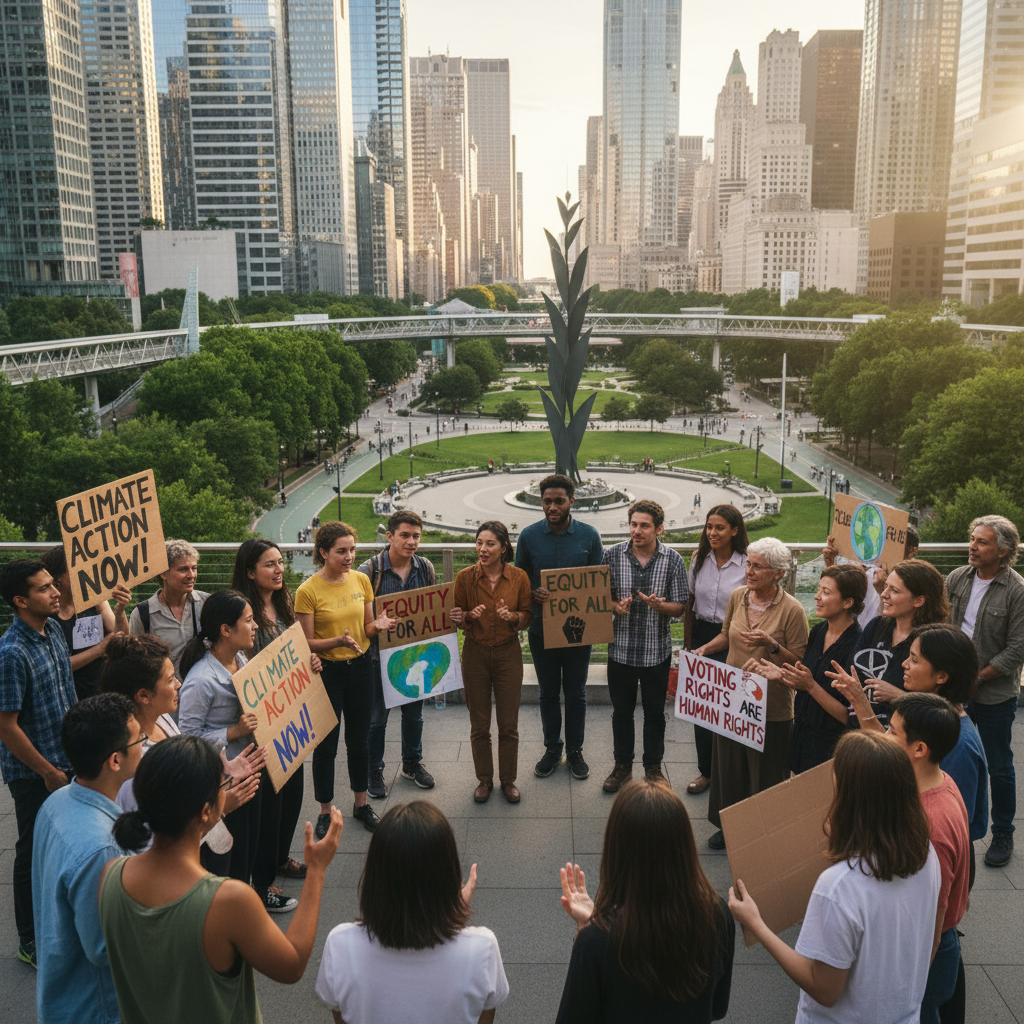
This article explores the contradictions of liberal politics, examining its promises against the realities of social inequality, government intervention, and identity politics.
When a global pandemic wipes out millions and the wealthiest balloon their fortunes, you have to wonder: are the voices advocating for social justice really for the people? Liberalism, as a political theory, promises freedom, equality, and an end to suffering, yet it often feels more like a smoke and mirrors act. Honestly, it’s stunning how often we buy into narratives of progressivism while glancing over what’s really happening beneath the surface.
Talking Points:
Let’s kick things off by unpacking the roots of liberal politics. You know those history books? They paint a rosy picture of progress, depicting the likes of John Locke, who argued for natural rights and government by consent, and Adam Smith, who championed free markets. Their ideas built a framework promising individual autonomy and the notion that people would thrive when allowed to pursue their self-interest. But here’s the riddle: how does that translate to today’s realities?
Modern liberalism’s claim is that everyone should have equal opportunities, but that’s where it gets sticky. As these ideas evolved, the definition of progressivism also morphed, often letting the state take on a bigger role in economic regulation under the pretense of ensuring equality. Irony indeed, considering we champion individual freedoms at the same time.
Talking Points:
Now let’s talk equality. We live in a world where the top 1% hold more wealth than the remaining 99% combined. Seriously, think about that. The narrative of equal opportunity feels a bit like a placebo—something we’re told exists but is rarely felt in practice.
The idea of social mobility is often thrown around—”Anyone can make it if they just work hard enough,” they say. Yet, many face barriers like systemic racism and class struggle that keep them from climbing the economic ladder. And while we’re at it, how much does identity politics amplify these divisions? Advocates claim it’s about representation and inclusion, yet the risk of further polarization is all too real.
Talking Points:
Is government intervention the answer? Proponents of progressivism argue it’s necessary to create a just society, leveling the playing field through social programs. But here’s a thought: does too much intervention distort the market?
When the welfare state takes over, it can make people dependent rather than self-sufficient. Wouldn’t it be better to empower individuals to pursue their economic desires freely? The balance between state control and individual freedom is a tense one, often tilting towards a stifled free market in a bid to regulate everything to death.
Talking Points:
Let’s unpack personal freedom. It’s foundational to the liberal ethos, right? But when the state starts cranking out regulations meant to protect society, sometimes it feels more like an iron fist. You want to support social justice, but at what cost? Do we suffocate individual expression in the name of collective safety?
I’ve seen it play out personally—like when a government steps in, claiming they know what’s best rather than trusting individuals to make informed decisions. There’s a fine line between protecting rights and infringing upon them, and our society often dances awkwardly along that line.
Talking Points:
Political correctness was supposed to be about fostering respect and reducing offensive speech. Yet, it’s morphed into something that feels more like a gag order. The irony is thick: we all want to respect others, yet the result has often been suppression of dialogue. Remember when discussing tough topics was means of growth? Now, it feels like walking on eggshells.
Censorship under the guise of political correctness does not promote inclusivity; it alienates those who wish to share their experiences that might not fit neatly into today’s narratives. It’s a slippery slope we’re riding together, folks.
Talking Points:
Identity politics has become a staple in the liberal agenda, pushing for recognition and rights of various groups. However, the question remains: are we unifying or fracturing society? While the intention is to elevate marginalized voices, it can also create an “us vs. them” mentality that leads to more division than resolution.
I get it; identity matters! But naming and labeling can turn into a weapon for political maneuvering. What happened to the idea of treating everyone based on their character rather than their category? The very fabric of communities can unravel if we care more about identities than common humanity.
Talking Points:
Ever feel like we’re being sold liberalism with a price tag? Look around—corporate interests are now the loudest advocates for social justice, climate policies, and diversity. This is what I call a corporate capture of ideals. It’s a charming facade under which the real goal is profit maximization.
Liberal policies often get co-opted by large companies looking to enhance their public image while diverting attention from exploitative practices. The grassroots movements struggle against this giant tide, attempting to reclaim genuine change in a landscape dominated by corporate influence.
Talking Points:
Globalization looks like a friend at first, right? It promises interconnectedness, cultural exchange, and economic growth. But isn’t it often just a guise for exploiting labor in low-wage countries? The liberal narrative attaches itself to globalization, but we need to scrutinize the underbelly of this relationship.
Many argue that globalization has eroded labor rights and local cultures, creating a race to the bottom in terms of wages and working conditions. Sure, we see advancements in trade, but at what cost? If we’re liberal in our ideals, we need to address these injustices too, not just celebrate market efficiencies.
Talking Points:
As we gaze into the future, what’s next for liberal politics? The cries for reform have never been louder. Many believe we need a reinvention of progressivism to truly address the failures of past policies. Just slapping a Band-Aid over existing issues won’t cut it anymore.
The liberal agenda needs a reboot that revisits its foundational principles while integrating the lessons learned from contemporary struggles. It can’t just be about providing surface-level fixes—it’s about authentic engagement and real advocacy for change.
The discourse around liberal politics has devolved into a string of competing narratives that rarely get to the heart of the issues. As we dissect the illusions of progressivism, it’s critical to foster a dialogue that prioritizes honesty above all. Conversations are messy, difficult, and fraught, but they are necessary to understand our shared social realities.
So, let’s not shy away from these discussions. Share your stories, share your frustrations, and let’s rewrite this narrative together. Have you experienced the dualities of liberal politics? How can we better navigate this landscape? Sound off in the comments!
1. What is liberalism in simple terms?
Liberalism is a political and economic doctrine that emphasizes individual rights, freedoms, and equality of opportunity, advocating for government action to ensure these rights.
2. How has liberalism changed over time?
Liberalism has evolved from individualistic roots championed by thinkers like John Locke to a more comprehensive approach that includes government intervention in the economy and an emphasis on social justice.
3. What is the criticism of identity politics?
Critics argue that identity politics divides society by emphasizing differences rather than commonalities, fostering a mentality of separation instead of unity.
4. What role do corporations play in liberal politics?
Corporations often influence liberal policies, co-opting social movements for their benefit while masking exploitative practices under the guise of promoting social change.
5. Can liberalism survive in today’s world?
Liberalism can thrive if it adapts to current societal challenges, addressing economic inequality, social justice, and the evolving definitions of freedom and rights.