





Newsletter Subscribe
Join thousands of readers who get our Sunday Briefing: one email, five essential stories, zero fluff. Subscribe NOW!
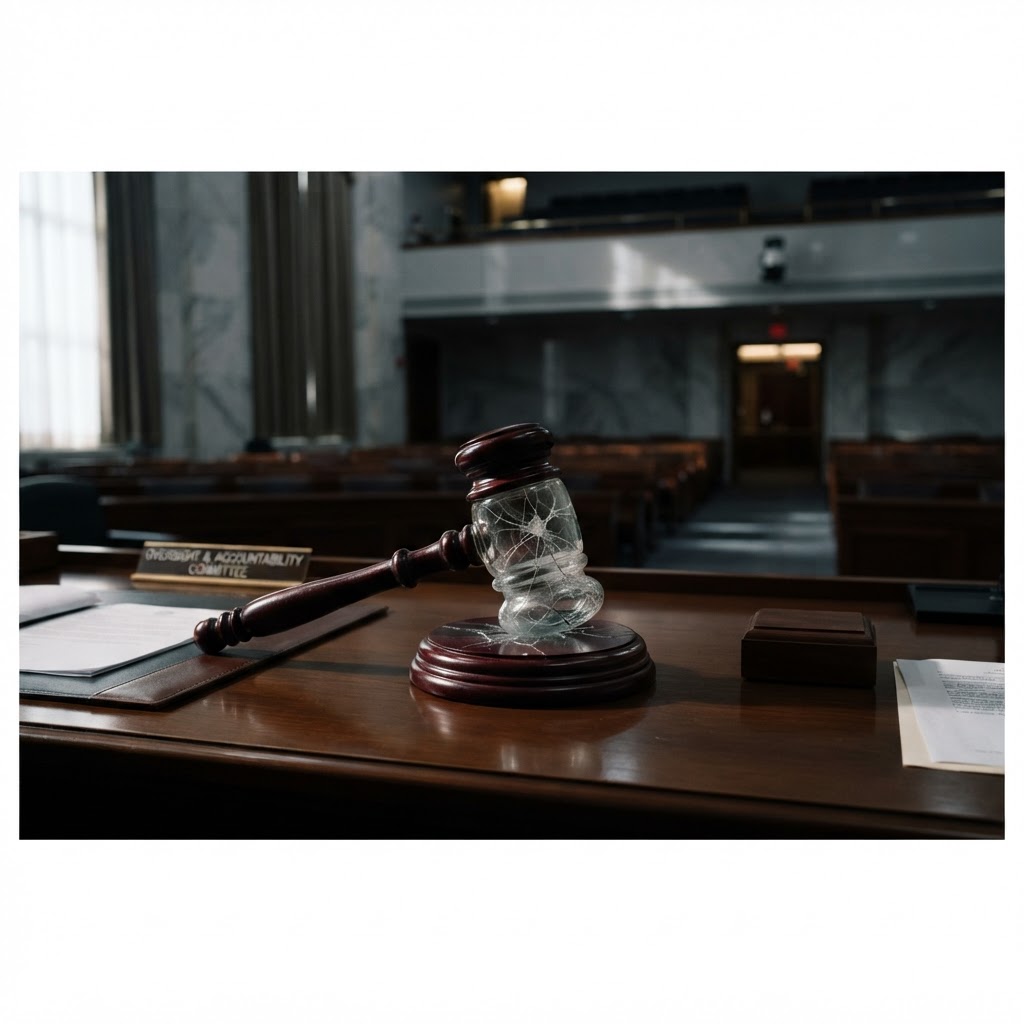
Political ethics watchdogs often serve as performative theater rather than real enforcement. Discover why these systems fail and how to demand genuine government accountability.
Talking Points:
* The myth of the institutional guardian
* Why public trust is misplaced
* The danger of performative oversight
I once spent three hours waiting in a cold hallway to testify before an ethics committee. I had a binder full of proof regarding local grant misuse. The hearing lasted ten minutes. They didn’t even open my folder. That day, I stopped believing the fairy tale that someone is actually watching the store.
We love to cling to the idea of a political ethics watchdog. We imagine a stoic, iron-willed protector standing between the public treasury and the sharks in suits. Reality hits different. Most of these agencies are paper tigers. They exist to look busy while the business of influence peddling continues uninterrupted.
When we hand off our civic duty to a bureaucratic entity, we sleepwalk. We assume that if something illegal happened, a report would be filed. Reports get filed. Nothing changes. That is the genius of the current setup. It gives us the comfort of process without the pain of justice.
Talking Points:
* Lack of real enforcement power
* Why bureaucratic inertia kills reform
* The gap between policy and practice
Most people think a political ethics watchdog has the power of a courtroom. They don’t. Often, their primary power is simply to recommend an investigation to a committee that is comprised of the accused person’s coworkers. Think about that for a second.
If you report your manager to their boss, you might get a fair look. If you report a legislator to a committee of their peers, you get a polite shrug. These bodies suffer from a chronic lack of enforcement power. They can bark, but they cannot bite.
Institutional integrity requires teeth. Without subpoena power or the ability to levy meaningful fines, an oversight agency is just a suggestion box. The paper trail ends when the political will to prosecute disappears. And it always disappears right at the finish line.
Talking Points:
* The incentive structure of the revolving door
* Defining regulatory capture in practice
* Why agencies prioritize commercial interests
I have seen former regulators walk into corporate boardrooms the week after their term ends. It’s not a coincidence. It’s a career path. When regulators look at a company, they don’t see a subject to monitor. They see a future employer.
This is the core of regulatory capture. The agencies supposed to protect the public instead protect the entities they regulate. It is not always a crime. Often, it is just a system working exactly as designed. The officials want to stay in the game, so they play nice with the heavy hitters.
Conflict of interest regulation sounds fancy on paper. In practice, it is a sieve. If you want to stop the bleeding, you have to stop the hiring cycle between government roles and private lobbying firms. Until then, the watchdog is just grooming its future boss.
Talking Points:
* Internal investigation flaws
* The role of party loyalty
* How bias shapes the outcome of ethics cases
I sat through a review where a clear violation was dismissed because the committee members were from the same party as the offender. They cited a technicality that wouldn’t apply to a normal citizen. It was disgusting. It was also completely expected.
Partisan bias is the silent killer of effective oversight. When a political ethics watchdog is packed with political appointees, you get political results. These investigations rarely look for truth. They look for cover.
This makes taxpayer funded oversight feel like a joke. We are literally paying for the people who lie to us to be cleared by their own friends. If you think the system is broken, look at who gets to make the rules. It’s the same people breaking them.
Talking Points:
* Why media outlets rely on government sources
* How commercial incentives shape reporting
* The fluctuation of public trust
Media organizations are supposed to be the real watchdogs. That is the theory. In reality, they are often as captured as the regulators. If a journalist burns their government source, they lose their access. Access is the currency of modern news.
Data shows that 74% of people think media criticism helps stop misconduct. That stat is a bit misleading. It depends heavily on which party is in charge. We tend to believe the watchdog when it targets the side we hate. When it targets our side, we call it a witch hunt.
This polarization gives politicians a perfect shield. They know they don’t have to be ethical. They just have to be popular with their base. As long as the news cycle keeps moving, they can outrun any scandal. The truth becomes a matter of opinion.
Talking Points:
* Waste of public resources
* The impact of campaign finance issues
* Why transparency is not enough
Think about the money. Since Citizens United, outside spending has exploded. We see individual donors dumping over $100 million into election cycles. Does anyone really believe a watchdog is going to curb that kind of influence?
The cost to the taxpayer isn’t just the budget for the ethics agency. It is the cost of bad policy bought and paid for by donors. When enforcement capacity is zero, the influence is total. We are paying for our own exploitation.
Political transparency is a buzzword that means nothing if the data is buried. Putting records online isn’t accountability. Accountability is knowing that if you steal, you go to jail. Anything less is just a fee for doing business.
Talking Points:
* The impossibility of internal reform
* Why structure matters more than personnel
* Demanding independent enforcement
I hear people say we just need better people in office. That is a naive hope. A good person in a corrupt system just gets eaten or quits. We need structural changes. Real reform requires independent bodies that the legislature cannot touch.
These bodies need protected funding. They need staff that cannot be fired for finding the wrong thing. They need to report to the public, not to the people they are investigating. Anything else is just theater.
I know, this sounds radical. But what we have now is clearly failing. If we want change, we have to demand a watchdog that operates outside the reach of the political machine.
Talking Points:
* Why petitions rarely work
* The power of localized grassroots pressure
* Using public records laws correctly
Stop signing online petitions. They are data collection tools for campaign managers. If you want to move the needle, you have to go local. Find out who sits on your ethics boards. Show up to their meetings.
Use your public records laws to file your own requests. Don’t wait for the watchdog to tell you what happened. Dig for the contracts, the emails, and the lobbyist logs yourself. Be the watchdog the system lacks.
It is hard work. It is thankless. But it is the only way to get real information. When the officials know you are watching, they act differently.
We need to stop pretending that our current institutions are doing their jobs. They aren’t. They are performative, captured, and fundamentally broken. Accountability shouldn’t be an illusion we feed ourselves to feel better about voting.
It is time to push for structural overhaul. Demand real, independent enforcement and stop falling for the press releases that promise change. You are the only person who can keep the government honest. Don’t leave it to someone else.
What has your experience been with oversight? Share your stories below.
1. Q: Why do political ethics watchdogs often fail to prosecute? A: Most watchdogs lack independent subpoena power and rely on the legislature to fund their operations, creating a conflict of interest that hinders aggressive enforcement.
2. Q: What is the revolving door and why is it problematic? A: The revolving door occurs when officials move between government roles and private sector lobbyist positions, often using their prior government knowledge to secure influence for their new private clients.
3. Q: Is it possible for an ethics watchdog to be truly independent? A: Yes, but only if they have protected budget status, the authority to prosecute without legislative approval, and staff who are immune from political retribution.
4. Q: How does media coverage contribute to the failure of accountability? A: Media outlets often prioritize access to political sources over investigative depth, allowing politicians to manipulate the narrative during ethics scandals.
5. Q: What should a regular citizen do if they suspect misconduct? A: Instead of relying on toothless boards, citizens should utilize Freedom of Information Act requests to obtain primary documents and share findings with local independent journalists.